Not sure whether a microinverter or a hybrid inverter with battery storage is right for your home? Learn how each works, what it’s good at, and who it suits best.
When people start looking at solar, the conversation usually begins with panels. But the part that decides how your solar PV system behaves day to day is the inverter. It converts the DC electricity from your panels into the AC electricity your home runs on, and it determines what happens to the power you don’t use right away.
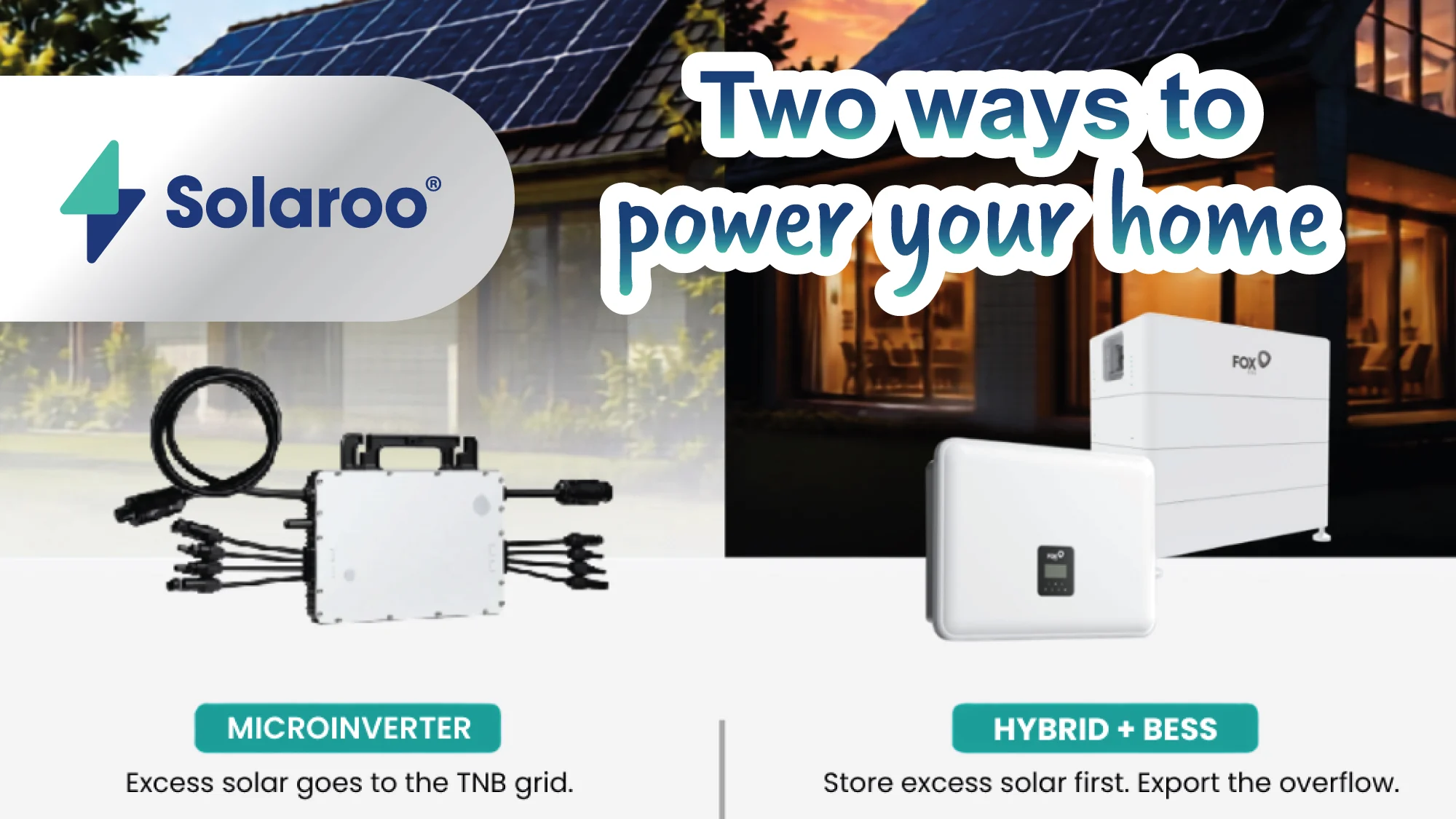
In this post, we’ll look at two popular approaches: the microinverter and the hybrid inverter with BESS (Battery Energy Storage System). This isn’t a contest. They’re built for different needs, and the right one depends on how you live and what you want from solar.
(Already read our
string inverter vs microinverter guide? Think of this as the next chapter.)
The big picture: What happens to your solar power?
Every solar-powered home follows the same basic flow: your solar panels generate power, your home uses what it needs, and the excess goes somewhere. The difference between these two systems is where the excess goes.
- Microinverter: Power → Use → Export
- Hybrid + BESS: Power → Use → Store → Export
That one extra step, Store, changes a lot.
Option 1: The microinverter
How it works
A microinverter is a small inverter installed at the solar panel level, usually on the roof right behind the panels. Instead of sending DC power down to one central box, each unit converts it to AC at the source. Your solar energy powers your home first, and any excess flows to the TNB grid.
What it’s good at
- Panel-level performance. Each panel works independently, so shade from a tree or bird droppings, only affects the panel it falls on, not the whole system.
- Flexible roof layouts. If your roof has multiple angles or orientations, microinverters handle it well.
- Panel-level monitoring. We are able to see how each panel is performing and spot problems quickly.
- Easy to expand. You can add panels later without redesigning the whole system.
- Panel-level conversion, simpler cabling. Solar energy DC to AC conversion happens at each panel, so there’s no long run of high-voltage DC cabling from the roof into your premises.
- Lower upfront cost than a system with batteries.
Things to keep in mind
- It has no storage. When the sun sets, your home is powered by the grid.
- A standard grid-tied microinverter system generally shuts down during a grid outage, as a safety requirement, so it won’t keep your lights on in a blackout.
Who it suits
A microinverter PV system is a great fit if you’re home mostly during the day, or your daytime usage is high. It also suits roofs with shading or complex layouts, and homeowners who want a lean system that starts saving on bills without the cost of batteries.
Option 2: The Hybrid Inverter + BESS
How it works
A hybrid inverter manages your solar panels, your home and your battery in one system. When your panels produce more than your home needs, the surplus charges the battery first. Only once the battery is full does the overflow get exported to the TNB grid. When the sun goes down, your home can draw from the battery instead of the grid.
BESS stands for Battery Energy Storage System. It’s the “Store” step in the flow.
What it’s good at
- Using more of your own solar energy. Instead of exporting everything you don’t use during the day, you keep it for the night time.
- Evening and night-time power. In many Malaysian homes, demand is highest when the sun goes down and the panels have stopped producing. A battery may not last throughout the night, but it will cover your evening electricity needs and reduce your reliance on the grid.
- Backup potential. With the right setup, including a backup (EPS) circuit – a hybrid system can potentially supply essential loads during a power outage.
- Future-ready. Battery capacity can often be expanded as your needs grow, depending on the BESS model.
Things to keep in mind
- It costs more upfront, mainly because of the battery energy storage systems (BESS).
- It’s a central system, so panel shading and layout are handled differently than with microinverters. Your installer should design the panel strings carefully.
Who it suits
A hybrid PV system makes sense if you use most of your electricity in the evening or at night, if you want some protection against outages, or if you want to be as self-sufficient as possible. It’s also a good choice if you want to be battery-ready, even if you start with a smaller battery.
Quick reference
|
Microinverter |
Hybrid + BESS |
| Excess solar |
Exported to the TNB grid |
Stored first, overflow exported |
| Energy at night |
From the grid |
From the battery (as capacity allows) |
| Blackout backup |
Typically none |
With proper backup setup |
| Shading tolerance |
Excellent (panel-level) |
Depends on system design |
| Upfront cost |
Lower |
Higher |
| Best for |
Daytime users, complex roofs |
Evening users, backup seekers |
So, which solar style fits you?
A few questions can help point you in the right direction:
- When do you use the most electricity? Mostly daytime points to a microinverter. Mostly evening and night points to a hybrid with a battery.
- Does your roof have shade or multiple orientations? If yes, a microinverter is worth a serious look.
- Does backup power during outages matter to you? If yes, a hybrid PV system is the one to explore.
- What’s your budget today, and your plans for the future? Starting lean is perfectly valid, and so is investing in storage from day one.
There’s no universally “better” option, only the one that fits your home, your routine and your goals.
Not sure? Let Solaroo help you decide
Every home is different, and the best way to choose is to look at your actual electricity bill, your roof and your lifestyle. The Solaroo team can review your usage and recommend the system that makes the most sense for you, with no pressure.
Drop us a WhatsApp message with your TNB bills at
+60 12 592 8010.