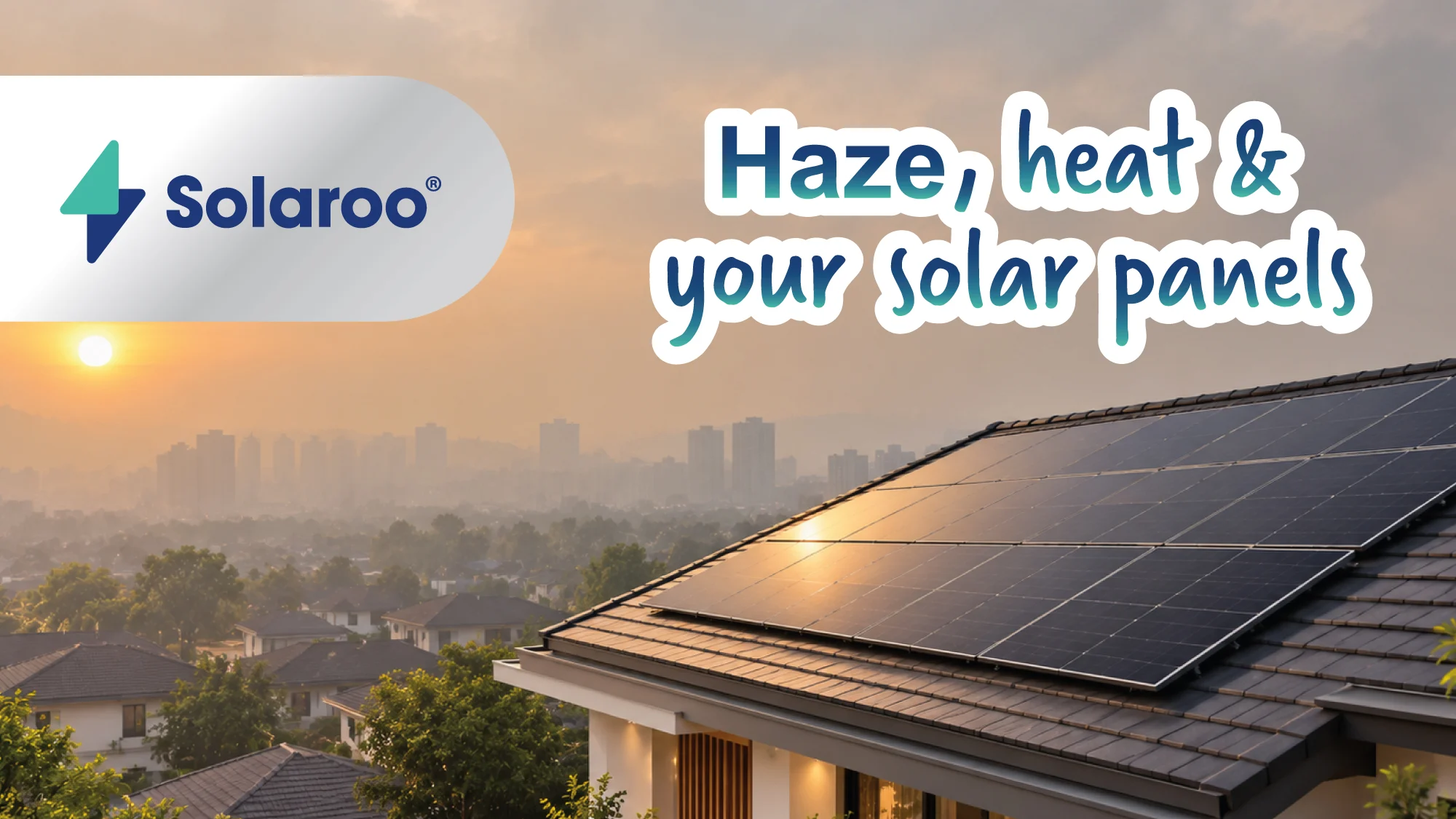
Hazy days have been part of our daily lives lately. As of 6 October 2026, 21 areas recorded unhealthy Air Pollutant Index (API) readings, with Batu Pahat the highest at 188. The government has also warned that a strong El Niño could keep conditions hot and dry into early 2027.
If your home is powered by solar energy, you’ve probably noticed your app looking a little flatter than usual. Here’s why, what’s normal, and how to look after your family while we wait it out.
Why haze dims your panels?
The haze consists of fine smoke particles hanging in the air. They scatter and absorb sunlight before it reaches your roof. Less light in means less power out.
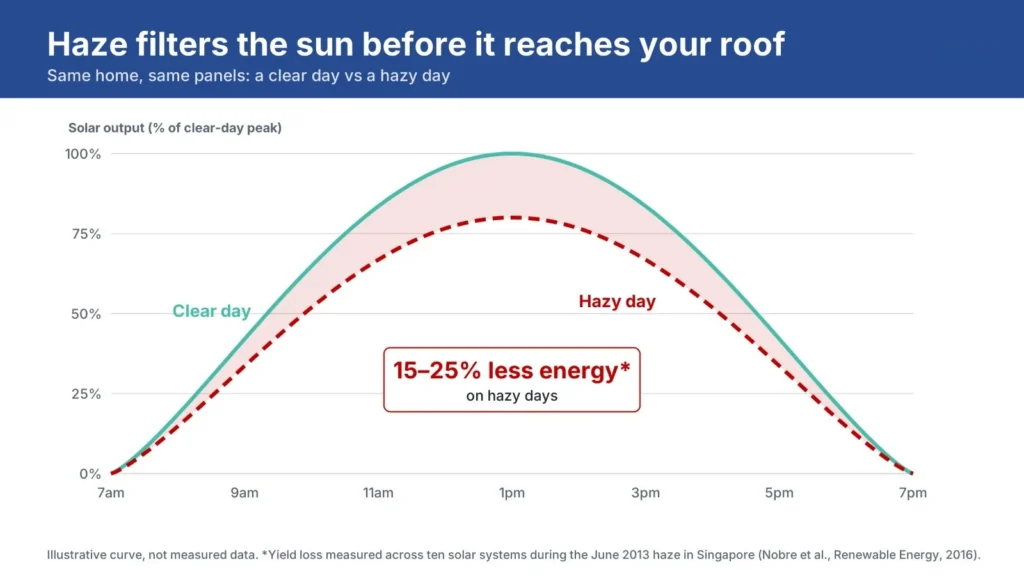
Research done in Singapore during the June 2013 haze put a number on it. Scientists at the Solar Energy Research Institute of Singapore (SERIS) tracked ten solar PV systems and found they produced 15 – 25% less energy on hazy days than on comparable clear days.
Your panels aren’t broken, and nothing needs fixing. The sun is simply being filtered.
What about the heat?
Hot weather feels like it should be great for solar. However, that’s not entirely accurate . Panels convert light, not heat, and they lose a little efficiency as panels get hotter, typically a fraction of a percent for every degree above 25°C. On a hot, hazy afternoon, both effects pull in the same direction.
The bigger effect of the heat is usually inside your home: longer aircon hours, closed windows and purifiers running. That pushes your usage up just as generation dips.
That is where the Automatic Fuel Adjustment (AFA) comes into the picture.
From 1 September to 31 December 2026, the bill protection threshold for homes is raised from 600 kWh to 800 kWh a month. If your home uses 800 kWh or less a month, you don’t pay the Automatic Fuel Adjustment (AFA), and the RM10 retail charge and 8% service tax.
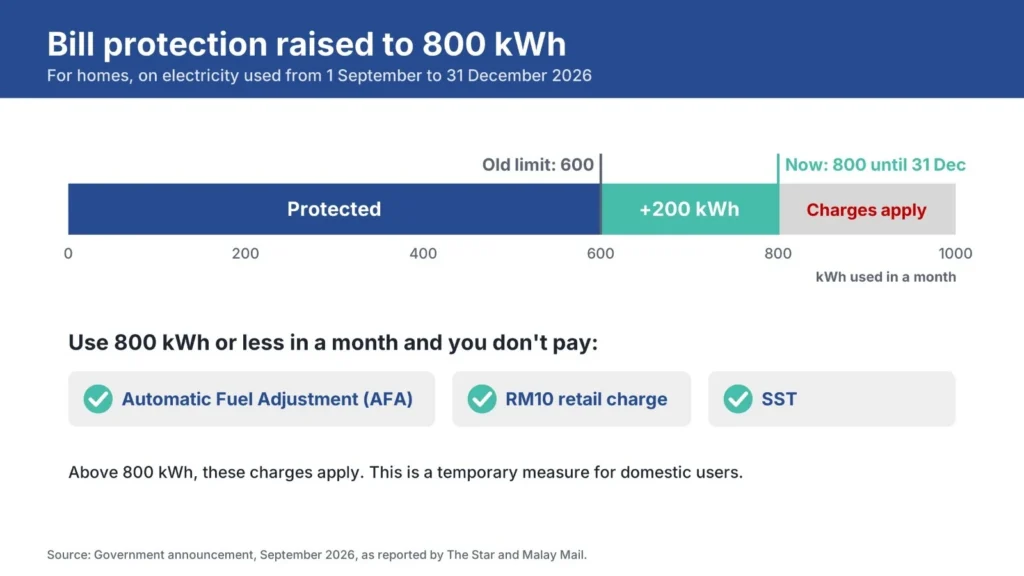
Go above 800 kWh and those charges apply. The change is temporary and runs to the end of December.
Solar energy helps manage your usage during this period. Even on hazy days, your panels continue to generate and reduce demand from TNB’s grid, so it doesn’t add kWh to your bill.
What this means for your solar PV system?
On hazy days your PV system will generate less than usual. That’s the haze, not a fault, and output recovers on its own once the skies clear. There’s nothing you need to do.
Fine ash may settle on your panels. The next proper downpour usually washes it off. Be sure not climb onto the roof or pressure-wash the panels yourself. It’s a fall risk for yourself and can damage the panel surface if improperly washed.
Looking after your family
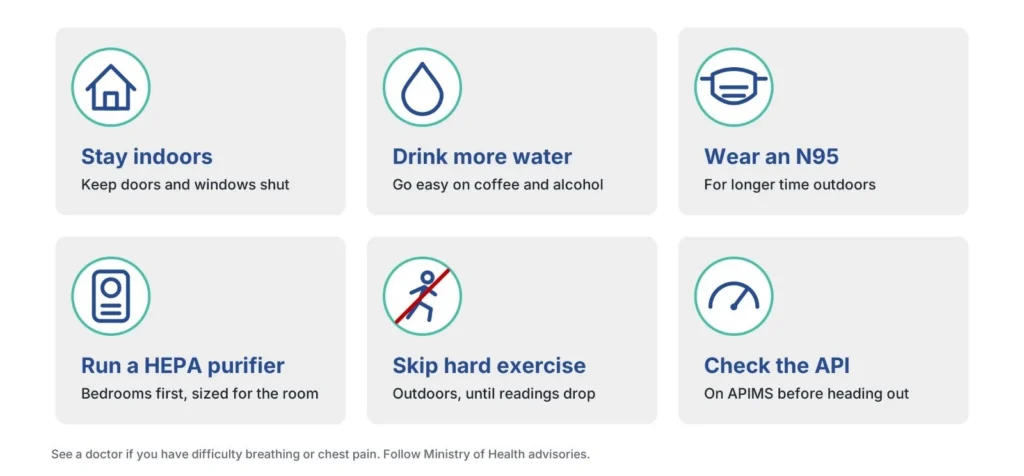
The haze is a health issue first. The standard advise:
Best of all, your daytime aircon and air purifier usage is covered by your own roof, even on a hazy day.
Waiting for clearer skies
A hazy few weeks is a dent in a 25-year average, not a change in what your PV system is worth. When the rain returns and the skies clear, generation recovers with them.
Until then: stay inside, stay hydrated, and keep an eye on the people who feel it most.
Here’s to cleaner air, clearer skies, and better generation and savings ahead.
Thinking about solar for your home? WhatsApp us at +60 12 592 8010.
Sources: Malaysian Air Pollutant Index Management System (APIMS) readings via Bernama, 6 October 2026; 800 kWh bill protection as reported by The Star and Malay Mail, September–October 2026; Nobre et al., "On the impact of haze on the yield of photovoltaic systems in Singapore," Renewable Energy 89 (2016); Ministry of Health Malaysia haze advisories.